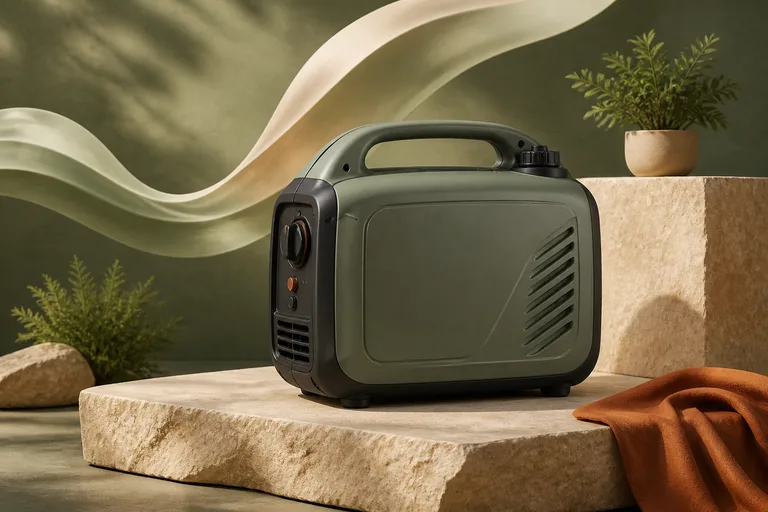
An inverter generator is usually the better portable-generator choice when you care most about:
- lower noise
- lighter weight
- fuel efficiency at partial load
- sensitive electronics
- camping/RV use
- modest emergency loads
It is usually not the best-value choice when your main objective is maximum whole-house backup power per dollar.
That is the core trade.
An inverter generator uses electronics to condition its output and allows the engine to vary speed with demand rather than operating at one fixed speed all the time.
That can make inverter generators:
- quieter
- more efficient under lighter loads
- easier to carry
- better suited to electronics
But once you need:
- 7 kW
- 10 kW
- 12 kW+
of serious home-backup capacity, conventional open-frame portable generators often deliver much more wattage for the money.
So the right question is not:
"Are inverter generators better?"
It is:
"Is quiet, efficient portable power worth more to me than maximum output per dollar?"
Inverter Generator: Quick Verdict
| Factor | Inverter Generator | Conventional Portable Generator |
|---|---|---|
| Noise | Better | Usually louder |
| Sensitive electronics | Strong | Model-dependent |
| Fuel efficiency at low load | Better | Usually weaker |
| Weight/portability | Usually better | Usually heavier |
| Maximum watts per dollar | Usually worse | Better |
| Whole-house backup | Limited on smaller models | Better on large models |
| Parallel capability | Common | Less common |
| RV/camping | Excellent | Usable but often overkill |
| 120/240V high-output options | Less common | Common |
| Best use | Essential loads / quiet backup | Heavy home backup |
Our call: buy an inverter generator when you need quiet, efficient, compact power.
Buy a conventional large portable when you need as much home-backup capacity as possible for the budget.
What Is an Inverter Generator?
An inverter generator still uses an internal-combustion engine and alternator.
The difference is what happens to the electricity afterwards.
Instead of sending conventional alternator output directly to the outlets, an inverter generator electronically conditions the power before delivering AC output.
Manufacturers commonly use this architecture to provide:
- stable frequency
- low harmonic distortion
- variable engine speed
- lighter compact designs
For example, Generac's current GP3300i is rated at:
- 2,500 running watts
- 3,300 starting watts
- less than 3% total harmonic distortion
- variable engine speed
- 120V output.
Champion's current 4,500W dual-fuel inverter similarly specifies clean power at less than 3% THD.
Why Are Inverter Generators Quieter?
The biggest mechanical advantage is variable engine speed.
A conventional portable generator often runs its engine at or near the speed needed to maintain output frequency even when electrical demand is light.
An inverter system can reduce engine speed when the load falls.
That can reduce:
- noise
- fuel consumption
- unnecessary engine speed
Many inverter generators also use enclosed housings designed specifically around noise reduction.
Champion's current enclosed 4,500W dual-fuel inverter is rated at 64 dB(A) from 23 feet.
Honda's EU3200i, used elsewhere in our current home-generator research, is an even more premium quiet-inverter example.
Are Inverter Generators Really Quiet?
They are quieter relative to conventional generators of similar output, not silent.
That distinction matters.
You are still running:
- gasoline or propane engine
- exhaust
- cooling fan
- moving mechanical equipment
An inverter generator outside a bedroom window can still be annoying.
"Quiet" means:
materially quieter combustion generator
not:
battery-level silence.
If silent backup is the objective, a home battery is the better technology class.
Inverter Generator vs Conventional Generator
Choose Inverter When:
- noise matters
- loads are modest
- sensitive electronics matter
- generator is used frequently
- portability matters
- RV/camping use matters
- you often run at low load
Choose Conventional Portable When:
- home backup is the primary job
- maximum watts per dollar matters
- 120/240V output matters
- you need 7-12+ kW
- central AC/well pumps are part of the plan
For serious manual whole-home backup, I would normally start with the portable generator category before inverter.
Are Inverter Generators Better for Electronics?
Usually, yes.
Current inverter-generator manufacturers specifically market their low-distortion output for:
- laptops
- televisions
- electronics
- tools
- appliances
Generac's current GP3300i specifies less than 3% THD and describes its TruePower output as suitable for sensitive electronics.
Champion's current dual-fuel inverter likewise publishes less than 3% THD.
That is a more meaningful specification than simply saying:
"inverter power is cleaner."
What Is THD?
THD means total harmonic distortion.
It measures how much an electrical waveform differs from an ideal sinusoidal waveform.
For a homeowner, you do not need to become an electrical engineer.
The useful point is:
lower-distortion generator output is preferable when powering sensitive electronic equipment.
That can include:
- computers
- networking equipment
- televisions
- modern appliance electronics
- chargers
- some control systems
Do not assume every conventional generator produces dangerous electricity.
But inverter generators are specifically designed around stable conditioned output.
How Big Are Inverter Generators?
The inverter category now spans a fairly broad range.
Examples include:
- compact 2-3 kW generators
- 3-5 kW portable/RV units
- larger open-frame inverter systems
- parallel configurations combining two units
Current examples in the project include:
Generac GP3300i
- 2,500 running watts
- 3,300 starting watts
- 59.5-61 lb depending on current listing/spec revision
- 1.06-gallon fuel tank
- 4.5 hours at 50% load
- 7 hours at 25% load.
Champion 4,500W Dual-Fuel Inverter
Gasoline:
- 4,500 starting watts
- 3,250 running watts
Propane:
- 4,500 starting watts
- 2,925 running watts
It weighs approximately 51.8 lb and operates at a manufacturer-stated 64 dB(A).
Champion 4,500W Open-Frame Dual-Fuel Inverter
Gasoline:
- 4,500 starting watts
- 3,650 running watts
Propane:
- 4,500 starting watts
- 3,285 running watts
It is rated at 64 dB(A), weighs 92.6 lb and uses a larger 4.02-gallon gasoline tank.
Those examples show how broad "inverter generator" has become.
Enclosed vs Open-Frame Inverter Generator
Not every inverter generator looks like a small plastic suitcase.
Enclosed Inverter
Usually optimised for:
- low noise
- portability
- RV/camping
- smaller loads
Open-Frame Inverter
Combines inverter electronics with a more conventional generator chassis.
That can provide:
- greater fuel capacity
- higher output
- lower cost per watt
- easier home-backup use
while retaining:
- variable-speed operation
- low-distortion inverter output
Champion's 4,500W open-frame dual-fuel inverter is a good example.
It produces more gasoline running power than its enclosed 4,500W dual-fuel sibling:
- 3,650W versus 3,250W
but weighs substantially more.
What Size Inverter Generator Do I Need?
Size from actual loads.
2-3 kW
Useful for:
- refrigerator
- freezer
- lights
- internet
- electronics
- small appliances
3-5 kW
Adds more room for:
- furnace blower
- sump pump
- microwave
- RV air conditioner
- broader essential-load backup
5 kW+
Begins moving toward heavier household backup.
But at this point, compare inverter pricing against a conventional portable generator because the watts-per-dollar gap can become substantial.
Use our generator size calculator rather than choosing from generic home-size tables.
Is a 2,000-Watt Inverter Generator Enough?
For basic emergency loads, often yes.
A roughly 2 kW inverter can potentially cover combinations of:
- refrigerator
- lights
- electronics
- internet
- small appliances
depending on actual load and compressor startup.
It is not whole-house backup.
It is essential-load backup.
That's fine if that's the job.
Is a 3,000-Watt Inverter Generator Enough?
For many homeowners, 3 kW is a very useful small-backup size.
It gives more room for:
- refrigeration
- furnace blower
- selected appliances
- electronics
and can be particularly strong for:
- camping
- RV
- short outages
A Generac GP3300i, for example, provides 2,500 running watts and 3,300 starting watts.
Is a 4,500-Watt Inverter Generator Enough for Home Backup?
It can provide a strong essential-load setup.
Champion's current enclosed dual-fuel model provides:
- 3,250 running watts on gasoline
- 2,925 running watts on propane.
Its open-frame sibling provides:
- 3,650 running watts gasoline
- 3,285 running watts propane.
That can cover plenty of real outage needs.
But it still sits well below a 7-12 kW large portable used for broader whole-panel backup.
Can an Inverter Generator Power a Refrigerator?
Yes, assuming adequate starting capacity.
Refrigerators are one of the strongest inverter-generator use cases because:
- running power is relatively modest
- the generator can throttle down when compressor is off
- electronics/other small loads can share the generator
A small inverter can therefore provide useful runtime without operating a large open-frame engine unnecessarily.
Can an Inverter Generator Run a Furnace?
Often, if the furnace uses gas/propane heat and electricity primarily for:
- blower
- controls
- ignition
Check:
- running wattage
- starting demand
- whether the furnace can be safely connected through appropriate transfer equipment
Electric resistance heating is a completely different load and can require enormous capacity.
Can an Inverter Generator Run a Well Pump?
Possibly.
The two issues are:
- voltage
- starting surge
Many smaller inverter generators are 120V only.
A well pump may require 240V.
That instantly rules out many small inverter models even if their wattage looks adequate.
For well-pump backup, verify the pump nameplate before buying.
Can an Inverter Generator Run Central AC?
Some larger inverter generators can run some central AC systems.
But this is not the sweet spot of the category.
You need:
- correct voltage
- enough running power
- enough motor-start capacity
- possibly a soft start
- sensible other loads
Once central AC is a core requirement, I would compare the inverter option against:
- large conventional portable
- standby generator
rather than forcing a small inverter into a job it was not built for.
120V vs 120/240V Inverter Generators
This is a critical home-backup distinction.
120V-Only Inverter
Can support:
- normal 120V outlets/appliances
- many essential loads
- RV applications
Cannot directly supply conventional 240V household loads such as many:
- well pumps
- central AC systems
- electric water heaters
- dryers
120/240V Inverter
More useful for broad panel-connected home backup.
Before buying an inverter specifically for a home electrical-panel connection, check voltage first.
A giant wattage number does not solve the wrong voltage.
Are Inverter Generators More Fuel Efficient?
They can be, particularly at lighter loads.
Because the engine can vary speed according to electrical demand, an inverter generator does not necessarily need to maintain high engine speed when only a small load is connected.
Generac describes its GP3300i Economy Mode as automatically adjusting engine speed to improve fuel economy and reduce noise.
Champion similarly says its Economy Mode varies engine speed according to electrical load to reduce noise and fuel consumption.
This benefit matters most when the generator frequently operates well below maximum output.
Inverter Generator Runtime
Always read runtime with its stated load.
Generac GP3300i
Current specifications show:
- 7 hours at 25% load
- 4.5 hours at 50% load.
Champion 4,500W Dual-Fuel Enclosed
Current manufacturer claims:
- up to 10 hours gasoline at 25% load
- up to 25 hours propane at 25% load on a 20 lb cylinder.
Champion 4,500W Open-Frame Dual Fuel
- up to 22 hours gasoline at quarter load
- up to 21 hours propane at quarter load.
That dramatic difference in gasoline runtime partly reflects the open-frame model's much larger fuel tank.
So do not compare runtime without comparing:
- load percentage
- tank size
- fuel
- output capacity
Why Some Smaller Inverters Have Shorter Runtime
A compact generator has limited space for fuel.
Generac's GP3300i carries approximately:
1.06 gallons
while Champion's open-frame 4,500W inverter carries:
4.02 gallons.
The larger tank naturally allows longer continuous operation.
Portability and runtime often trade against one another.
Gasoline Inverter Generator
Gasoline remains the most common inverter-generator fuel.
Advantages:
- strong output
- broad model selection
- compact equipment
Disadvantages:
- fuel storage
- ageing fuel
- refuelling during outages
For occasional home backup, gasoline works well if you have an actual fuel-storage/rotation plan.
Dual-Fuel Inverter Generator
Dual-fuel inverter models normally run on:
- gasoline
- propane
This combines:
quiet inverter architecture
with:
propane storage flexibility.
Champion's current 4,500W dual-fuel inverter is a strong example, producing:
- 3,250 running watts gasoline
- 2,925 running watts propane.
For a homeowner who values both quiet operation and stored propane, dual-fuel inverter is an excellent category.
Does an Inverter Generator Produce Less Power on Propane?
Often, on dual-fuel models.
The Champion example above drops from:
3,250W gasoline
to:
2,925W propane
running output.
The current open-frame version similarly drops:
- 3,650W gasoline
- 3,285W propane.
Use the rating for the fuel you actually plan to use.
Same rule as the rest of the site.
Tri-Fuel Inverter Generators
The tri-fuel category is increasingly relevant, but it deserves its own page.
For a homeowner with existing natural gas, tri-fuel can combine:
- quiet inverter operation
- NG convenience
- propane storage
- gasoline backup
But adding fuel options does not automatically make a generator better.
Check:
- power on each fuel
- voltage
- transfer compatibility
- price
Compare gasoline, propane and natural-gas operation in our tri-fuel generator guide.
Parallel Inverter Generators
One interesting inverter feature is the ability to connect two compatible generators in parallel.
That can increase available output while preserving the ability to use just one smaller generator when demand is low.
Generac's GP3300i is parallel ready.
Champion's current 4,500W dual-fuel inverter is also parallel ready.
This can be attractive for:
- RV use
- modular emergency backup
- people who need portability most of the time but occasional extra capacity
Is Parallel Better Than Buying One Bigger Generator?
Sometimes.
Two Smaller Inverters
Advantages:
- redundancy
- easier lifting
- ability to run one during low demand
- modular capacity
Disadvantages:
- two engines to maintain
- two fuel systems
- additional equipment
- potentially higher cost
One Larger Generator
Advantages:
- simpler operation
- one engine
- often cheaper per watt
For permanent home-backup duty, one correctly sized generator is normally simpler.
For mobile/RV use, parallel flexibility has more appeal.
Inverter Generator for RV Use
This is arguably where inverter generators shine brightest.
RV users value:
- low noise
- portability
- fuel efficiency
- stable power
- TT-30-style connections
- parallel capability
Champion's current 4,500W dual-fuel inverter includes a 120V TT-30R RV outlet.
That is a much more natural use case than trying to make a small inverter power an all-electric suburban house.
Inverter Generator for Camping
Excellent fit.
The same strengths matter:
- quieter operation
- lower load
- portability
- small appliances/electronics
Just remember campsite rules and carbon-monoxide safety still apply.
Quiet does not mean safe for enclosed use.
Inverter Generator for Home Office Backup
Very strong fit.
If the outage priority is:
- modem/router
- laptop
- monitors
- lights
- refrigerator
you do not need a 10 kW generator.
A modest inverter can keep a remote worker functional while using much less fuel and producing much less noise.
Inverter Generator vs Home Battery
These compete more directly than a huge standby generator and battery do.
Inverter Generator Wins On:
- lower purchase cost
- extended runtime through refuelling
- portability
Battery Wins On:
- silence
- automatic operation
- no exhaust
- indoor-friendly installed architecture
- zero local combustion
- solar integration
For repeated short outages, battery becomes very attractive.
For occasional long outages where budget matters, inverter generator can be dramatically cheaper.
Inverter Generator vs Standby Generator
These serve almost opposite customer profiles.
Inverter
- manually deployed
- smaller capacity
- portable
- quiet
- lower cost
Standby
- permanent
- automatic
- large capacity
- weather-ready
- higher installed cost
If you need:
"the fridge, internet and some lights"
inverter wins on economics.
If you need:
"the entire house comes back automatically while I'm away"
buy whole-house standby.
Inverter Generator Price
Inverter generators generally cost more per watt than conventional open-frame equipment.
Current examples include:
Generac GP3300i
Current MSRP starts around:
$939
for:
- 2,500 running watts
- 3,300 starting watts.
That is not cheap in watts-per-dollar terms.
You are paying for:
- inverter electronics
- compact architecture
- quieter operation
- portability
This is why someone needing 10 kW should not simply buy four small inverters because "inverters are better."
Are Honda Inverter Generators Worth It?
Honda sits at the premium end of the inverter market.
The value proposition is not:
cheap wattage.
It is usually:
- low noise
- portability
- established engine/generator platform
- inverter quality
- long-term ownership appeal
For example, our current project research uses the EU3200i as a premium essential-load pick rather than a whole-home value pick.
If your only metric is watts per dollar, Honda will often lose.
If ownership quality and noise matter heavily, the equation changes.
Are Cheap Inverter Generators Worth It?
Potentially.
Do not judge only by brand.
Check:
- rated running output
- THD specification
- warranty
- service/parts availability
- CO shutdown
- actual noise specification
- fuel runtime
- parallel support
A cheap inverter with no realistic service path can become disposable equipment.
That may still be +EV if the purchase price reflects it.
Just know what you're buying.
Inverter Generator Maintenance
An inverter generator still contains a combustion engine.
It still needs:
- oil changes
- air filter
- spark plug
- fuel management
- storage maintenance
The inverter electronics do not eliminate engine service.
Follow the exact manufacturer interval.
Inverter Generator Carbon Monoxide Safety
An inverter generator produces carbon monoxide just like other combustion generators.
The fact it is:
- small
- enclosed
- quiet
can actually create a dangerous psychological problem because it feels more appliance-like.
It is not an indoor appliance.
Operate portable generators outside according to current manufacturer/CPSC safety requirements.
CO shutdown is another layer of protection.
It is not permission to use one in a garage.
Can You Run an Inverter Generator in a Garage?
No.
Same answer as conventional portable generators.
Do not run it:
- garage
- basement
- shed
- enclosed porch
- inside the home
even if doors are open.
Quiet operation does not change exhaust chemistry.
Can an Inverter Generator Be Connected to a Home Panel?
Yes, if the generator and electrical design support it.
But check:
- voltage
- available amperage
- neutral configuration
- suitable inlet
- transfer switch/interlock
- manufacturer limitations
A small 120V inverter may be a poor candidate for whole-panel backup even though it technically produces enough watts for selected loads.
For a panel-connected system, 120/240V capability becomes much more useful.
Inverter Generator and Interlock Kit
A compatible 120/240V inverter generator can potentially feed a home through an approved generator interlock.
The interlock does not increase available generator power.
You still manually manage loads.
This can be a brilliant setup if:
- quiet operation matters
- household loads are modest
- generator supports the correct electrical configuration
When I Would Buy an Inverter Generator
I would buy one for:
Refrigerator + Electronics Backup
Yes.
RV / Camping
Yes.
Home Office
Yes.
Gas Furnace + Refrigeration + Lights
Often yes, after load calculation.
Well Pump + Central AC + Whole House
Usually I'd go larger conventional portable or standby.
Frequent Short Outages Where Noise Matters
Strong use case.
Week-Long High-Load Hurricane Backup
Not my first choice unless using a much larger inverter system with a proper fuel plan.
When I Would Not Pay the Inverter Premium
I would not pay it when the actual buying criterion is:
maximum home-backup wattage for the budget.
If $1,500 buys:
- 3-4 kW premium inverter
or:
- 8-10+ kW conventional portable
and the customer genuinely needs 8 kW during an outage, the quieter 3 kW generator is not the better purchase.
The job decides.
Best Inverter Generator Size by Use Case
| Use Case | Capacity I'd Investigate |
|---|---|
| Electronics / charging | 1-2 kW |
| Refrigerator + electronics | 2-3 kW |
| Essential home loads | 3-5 kW |
| RV with AC | 3-5 kW |
| Broader home backup | 5 kW+ |
| Central AC / large well pump | Usually compare conventional 120/240V portable first |
These are directional ranges.
Use actual equipment loads.
Inverter Generator FAQ
What is an inverter generator?
An inverter generator uses electronic power conversion to deliver conditioned AC output and commonly allows variable engine speed based on electrical demand.
Are inverter generators better than regular generators?
They are better for noise, portability, partial-load efficiency and sensitive electronics. Conventional portable generators usually win on maximum power per dollar.
Are inverter generators really quieter?
Generally, yes. Variable engine speed and enclosed designs can materially reduce noise compared with conventional equipment of similar output.
Are inverter generators safe for electronics?
Models publishing low THD and conditioned inverter output are designed specifically for sensitive electronics. Current Generac and Champion examples specify less than 3% THD.
Can an inverter generator run a refrigerator?
Yes, when it has sufficient running and compressor-starting capacity.
Can an inverter generator run a furnace?
Often, particularly gas furnaces where electrical demand is mainly the blower and controls.
Can an inverter generator run a well pump?
Potentially, but many well pumps require 240V while many small inverter generators are only 120V.
Can an inverter generator run central AC?
Some larger models can, but starting demand and voltage matter. For substantial central AC loads, compare against larger conventional portable or standby equipment.
Is a 3,000-watt inverter generator enough for a house?
It can provide useful essential-load backup but is not generally enough for unrestricted whole-home operation.
Is a 4,500-watt inverter generator enough?
It can handle a strong essential-load setup. Current Champion examples provide roughly 3.25-3.65 kW continuous gasoline output depending on model.
Are dual-fuel inverter generators worth it?
Yes when propane storage adds practical value. They combine inverter benefits with a second fuel source.
Can you connect two inverter generators together?
Many models support parallel operation when used with the manufacturer's compatible equipment.
Can you run an inverter generator indoors?
No. It is still a combustion generator and produces carbon monoxide.
Final Verdict
Inverter generators are better machines for certain jobs, not better generators in every situation.
Buy an inverter when the things you care about are:
- quiet operation
- portability
- sensitive electronics
- low/moderate loads
- light-load fuel efficiency
- RV/camping
- short-to-medium outage backup
Do not automatically buy one when your actual requirement is:
10 kW of whole-house manual backup.
At that point, a large conventional portable generator often delivers much more useful capacity for the money.
The simplest buying rule is:
Under Roughly 3 kW of Real Backup Need
Inverter is usually my first choice.
Around 3-5 kW
Inverter remains very attractive, especially if noise matters.
Above That
Compare the inverter premium carefully against a conventional portable.
Once You're Chasing Large Central AC + Whole-Panel Loads
The conversation usually shifts toward:
- large conventional portable
- tri-fuel generator
- or permanent standby
The inverter category wins because it can run only as hard as the load requires.
Don't ruin that advantage by buying an expensive quiet generator and then asking it to do the job of a 10 kW open-frame machine.
Choose the architecture from the load.
Evidence Basis
Current model specifications were checked against manufacturer sources.
Generac's current GP3300i provides 2,500 running watts, 3,300 starting watts, variable engine speed, less than 3% THD, 4.5 hours runtime at 50% load and 7 hours at 25% load.
Champion's current enclosed 4,500W dual-fuel inverter produces 3,250 running watts on gasoline and 2,925 on propane, is rated at 64 dB(A), and advertises up to 10 hours gasoline or 25 hours propane runtime at 25% load.
Champion's current open-frame 4,500W dual-fuel inverter produces 3,650 gasoline / 3,285 propane running watts, uses variable engine speed, is rated at 64 dB(A), and carries a larger 4.02-gallon gasoline tank for up to 22 hours at quarter load.