PLAN BEFORE YOU BUY
Generator sizing & costs.
A clearer backup plan.
Generator sizing sets the required backup capacity; the budget includes equipment, installation and ownership. Build the load list first, identify the available fuel, then compare complete proposals for that same scope.
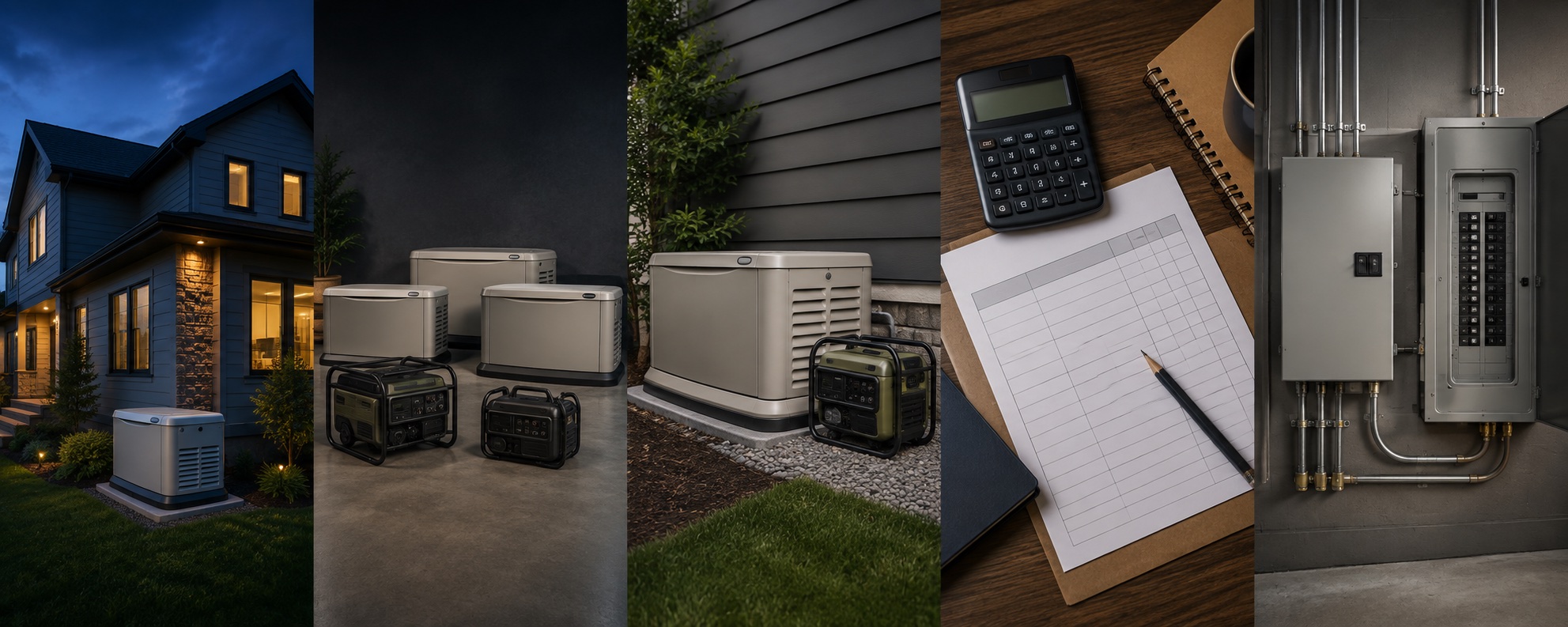
Whole-House Generator Size Calculator
Add your appliances, account for starting loads and download a worksheet for your installer.
↗Understand the full cost
Explore equipment, installation, fuel and maintenance before comparing prices.
↓Prepare for installer quotes
Ask for a load calculation and an itemized proposal for your home.
↗THE PLAN AT A GLANCE
From “what must run?”
to a complete quote.
Four connected decisions.
Start with your home, then compare the equipment.
List your loads
Decide what needs power and what you expect to run together.
Build a worksheetAccount for startup
Include motor-starting demand and discuss which loads can be managed.
Explore load managementConfirm fuel & fit
Have an installer check fuel-specific output, supply and site requirements.
Compare fuel choicesCompare full quotes
Use the same load plan and scope to compare itemized proposals.
Review the quote checklist
Plan separately for ownership: fuel, scheduled maintenance and future repairs.
FROM LOADS TO A REALISTIC BUDGET
Answer the next question
Ready to compare equipment? Use the home backup buying shortlist alongside your load and budget plan.
A generator's advertised kW rating and equipment price are only part of the decision. Your fuel, starting loads and installation requirements shape the final system.
What size generator do you need?
Start with the loads you want to run together, including appliances with motors.
What Size Generator Do I Need for My House?
The right generator size depends on what you want to power at the same time , not simply the square footage of your house. For a whole-house standby generator, many homes ultimately fall somewhere around the 14–26 kW range , but that is not a sizing recommendation. Homes with relatively light electrical loads may…
Read the guide ↗What Size Generator Do I Need for Central Air Conditioning?
Learn how to size a generator for central air conditioning using running amps, LRA, voltage, soft starts and whole-house load — not AC tonnage alone.
Read the guide ↗What Size Generator Do I Need for a Well Pump?
Learn what size generator you need for a well pump using voltage, horsepower, running amps and starting surge — including 1/2 HP, 3/4 HP, 1 HP and larger pumps.
Read the guide ↗Generator Load Management: Decide Which Loads Can Wait
Plan which household loads run, wait or cycle during backup. Compare manual priorities, automatic load shedding and a larger generator.
Read the guide ↗Generator Wattage Chart: Running Watts vs. Starting Watts
Use appliance wattage examples to plan backup loads. Learn the difference between total and additional starting watts and replace estimates with actual data.
Read the guide ↗Air Conditioner Soft Starts and Generator Sizing
A soft starter may change an air conditioner’s starting demand, but it does not establish the generator size for your whole home. The decision needs the exact HVAC equipment, compatible starter, generator capability and other loads operating at the same time.
Read the guide ↗What will the complete system cost?
Plan for equipment, installation and ongoing ownership—not just the generator price.
How Much Does a Whole House Generator Cost in 2026?
Separate generator equipment, complete installation, financing and ownership costs. Compare scope, exclusions and site-specific proposals before you buy.
Read the guide ↗Whole House Generator Installation: Process, Cost, Requirements & What to Expect
Plan whole-house generator installation: sizing, placement, permits, electrical and fuel work, inspections and what to check in an installer quote.
Read the guide ↗Generator Installation Quote Checklist: Compare Complete Proposals
Compare generator installation quotes with a scope worksheet, line-item exclusions and property-specific questions before you commit to a proposal.
Read the guide ↗Generator Running Cost: Calculate Fuel Cost for an Outage
Generator fuel cost equals consumption per hour multiplied by the price per matching unit and the number of operating hours.
Read the guide ↗Whole-House Generator Maintenance Cost: What Should You Pay in 2026?
See what whole-house generator maintenance costs in 2026, including annual service plans, one-off visits, air-cooled vs liquid-cooled service and common add-ons.
Read the guide ↗How does fuel affect your plan?
Compare fuel choices and the supply requirements that belong in an installation proposal.
Natural Gas vs Propane Generators: Which Fuel Is Better for a Whole-House Generator?
Compare natural gas vs propane whole-house generators by output, fuel cost, runtime, tank requirements, outages, cold weather and installation.
Read the guide ↗Natural Gas Generators: Costs, Sizes, Fuel Use & Best Uses for Home Backup
Learn how natural gas generators work, what sizes are available, fuel consumption, operating cost, gas-line requirements and when natural gas is the best choice.
Read the guide ↗Propane Generators: Tank Size, Runtime, Cost & Best Uses for Home Backup
Learn how propane whole-house generators work, what tank size you need, runtime, fuel consumption, cold-weather limits, installation cost and when propane is the best choice.
Read the guide ↗Diesel Generators for Home Backup: Cost, Runtime, Fuel Use & When They Make Sense
Learn when a diesel whole-house generator makes sense, including sizes, fuel consumption, tank runtime, operating cost, maintenance and diesel vs natural gas or propane.
Read the guide ↗Propane Tank Size for a Standby Generator
Learn what propane tank size a whole-house standby generator needs, including Generac's current 250-gallon minimum and how generator fuel burn affects runtime.
Read the guide ↗Generator Gas Line Sizing: Pipe Size, BTU Requirements, Pressure & What Your Home Needs
Learn how to size a natural-gas line for a standby generator, including BTU demand, pipe length, pressure, meter capacity, regulator requirements and why generator fuel lines must be sized at full load.
Read the guide ↗What should you take to an installer?
Bring your load worksheet, your preferred fuel and a list of appliances you expect to use during an outage. Ask the installer to identify managed loads, confirm fuel-specific generator output and separate equipment, site work, permits and ongoing service in the proposal.
The calculator is a planning estimate. Final sizing and installation requirements need a qualified professional's assessment of your home.
Ready to compare brands and models? Explore the brand hub →